‘Yardley’ Towns, Villages and Other Places
There are many geographical place names that hold ‘Yardley’ in their name, both in the British Isles as well as elsewhere in the world. These locations, their history and any knowledge about them, will be added as and when information and evidence comes to hand. There is some great existing historical research across the internet, some of which we share here or the links to that information. Wherever possible we want to duly acknowledge those who have done the research and their work – we are dedicated to our family name and history and want to share it and make it known. We may not always know the source of information but are most happy to be corrected and will ensure due credit to such individuals once known.
If you know of any places that are not listed here then please be in touch with us so that we can work to include any missing locations, buildings, archaeology, artefacts and any other such.
Please email us at: YardleyFoundation@protonmail.com
The Parish of Yardley – England
An Ancient Parish which was originally much larger than its current twenty-first century manifestation which used to stretch from the Village of ‘Yardley’ all the way to ‘Yardley Wood’ and encompassed many other villages and nearby areas and was one of nine Parishes of what we now know as the Birmingham area. The first known written reference to ‘Yardley’ as a Parish and place where people and families lived was in King Edgar’s Charter of 962 (wherein it was that the ancient shire boundaries of much of England were clarified). Referred to in the old English written form as “Gyrdleah” it was also confirmed as being the property of the Benedictine Abbey or Pershore. From this Charter it is was geographically defined that ‘Yardley’ covered approximately eleven and half square miles (7,590 Acres) and that there were five ‘manses’ upon the land. Such denotes that with the land being large enough that at least five families existed in the Parish in the tenth century. Geographically, at this time, the Yardley Parish was part of Worcestershire and surrounded on the other three sides by Warwickshire. It was administered and controlled by the Abbey of Pershore. Great expansion came with the Norman Invasion in 1066 and long history of both change and conservation followed on through the centuries. Rachel Roberts’ “The Changing Face of Yardley” Essay is an excellent exploration of the history of the Parish through the centuries to today. You can read the Essay here.
The Village of ‘Yardley’ – England
“The Yardley Conservation Society note ‘Yardley’ as a village of remarkable survival, which retains more of its rural atmosphere than any other village now incorporated within Birmingham. The area was designated a Conservation Area in July 1969 and was upgraded to Outstanding category in 1976, the only one so far in the city”. Photo: Old Yardley Park and Village by Robert C Jones
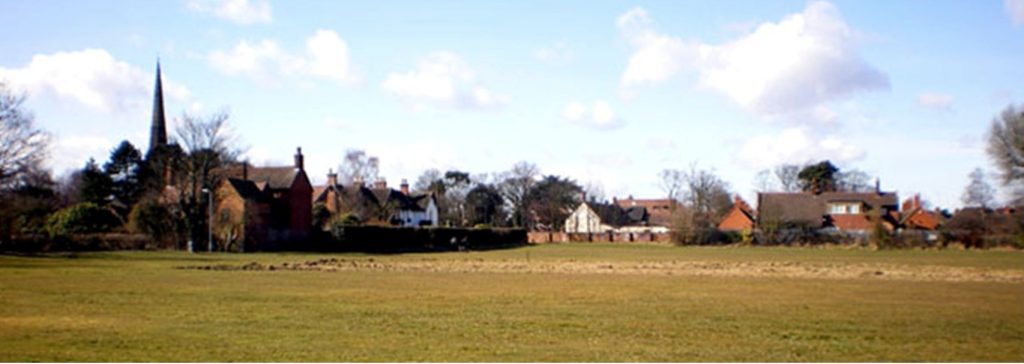
“At the heart of Yardley is the historic church of St Edburgha’s a Grade I listed building built in stone which dates back to the 13th Century and has been a centre for worship for over 1000 years“. Friends of Old Yardley Park are a group of local people who aim to protect the ancient parkland in Yardley. The society have recently created a blog to tell the story of what happens at Old Yardley Park which can be viewed here.
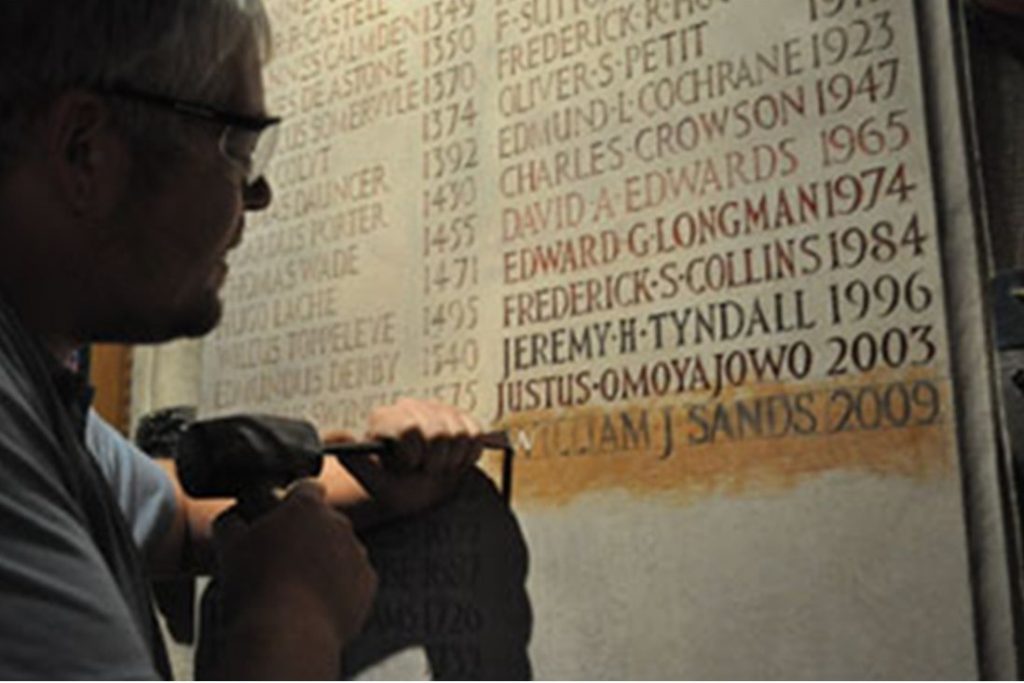
Ian Lane ‘The Stone Mason’ who can be seen below carving Rev William J Sands name onto the Tablet at St Edburgha’s Church. Using almost exactly the same methods as those used by the Romans, the lettering is marked on the stone by hand and carved into the stone using nothing more than hammer and chisels”. Photo: The Stone Mason by Robert C Jones